
Opinion
Are AI Scientists Reliving The Past?
—
By Michael Posner
As seen in: Forbes
In 1939, physicists Leo Szilard and Albert Einstein wrote to President Roosevelt encouraging the US government to develop a nuclear weapons program, and to do so before the German Nuclear Project achieved the same result. The rationale was simple—winning the race to build these weapons would enable the US and its allies to achieve victory in World War II, hasten an end to the fighting, and ultimately save lives. Their letter precipitated the launch of the Manhattan Project and, six years later, the bombs that were dropped on Hiroshima and Nagasaki.
Almost from the outset, the scientists and engineers of the Manhattan Project had deep concerns about the destructive effects of the breakthrough technology they were creating. Though they also saw the potential benefits of nuclear energy, they knew better than anyone the enormous risks this technology posed and the need for ways to constrain its use. They could see that the science was moving faster than society’s ability to set ethical or moral guardrails. But they felt impotent, lacking the power or authority to impose such limits.
Today, a group of equally talented engineers and computer scientists is racing to develop frontier artificial intelligence, and just as the Manhattan Project scientists did eight decades ago, they are raising alarms about the looming risks they see ahead of us.
Read the full Forbes article.
___
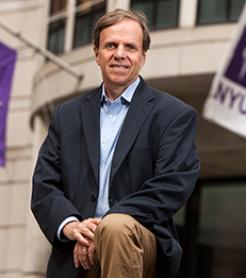
Michael Posner is the Jerome Kohlberg Professor of Ethics and Finance, Professor of Business and Society and Director of the NYU Stern Center for Business and Human Rights.