
Opinion
The Outlook for the U.S. Economy in 2026.
—
As seen in: Project Syndicate
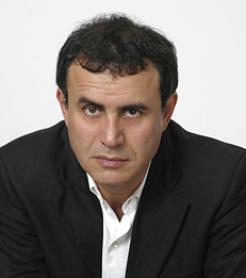
By Nouriel Roubini
This has been a bumpy year for the US economy. Although there was a massive boom in AI-related investments, uncertainties caused by President Donald Trump’s tariffs and other polices curtailed growth in the second half of the year, and disruptions to official employment and inflation data as a result of the longest-ever government shutdown have further clouded policymakers’ perceptions. The big question now is what 2026 will bring.
There are three possible scenarios. In the baseline case, the US will suffer a growth recession (meaning below-trend GDP growth) for a few months, followed by a recovery and a gradual decline in the inflation rate toward the US Federal Reserve’s 2% target. Think of this as the Goldilocks scenario. In the second scenario, the economy experiences a shallow recession for a few quarters, followed by a slower return to growth than in the first scenario. And the third scenario features a “no-landing” outcome in which growth remains strong but inflation does not fall toward the target rate.
The Goldilocks scenario is the baseline because market discipline, good advisers, and a still-independent Fed (notwithstanding Trump’s periodic threats) have already forced the White House to blink and climb down from the high tariffs announced on April 2. Since then, the administration has negotiated various trade deals and frameworks featuring more modest tariff increases (often in exchange for commitments to invest in the United States). As a result, US and global growth have slowed somewhat, but inflation has risen only modestly.
Read the full Project Syndicate article.
___
Nouriel Roubini is a Professor Emeritus of Economics and International Business and the Robert Stansky Research Faculty Fellow.