
Opinion
Taxing the Talent that Builds American Science
—
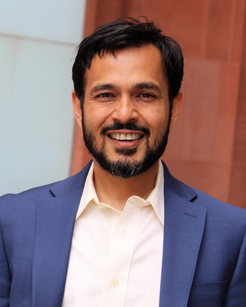
By Deepak Hegde
As seen in: Proceedings of the National Academy of Sciences
For four decades, the United States has run one of the most profitable trades in the world economy, and almost no one calls it by its name. It imports young people that the global labor market has underpriced—graduate students whose ability outruns their résumés—gives them a place to prove it, and keeps much of the upside in patents, companies, and Nobel Prizes. A Department of Homeland Security (DHS) rule, issued in July, would quietly tax that trade at its source. Unfortunately, the rule has been treated largely as a student-visa question. In fact, its larger and more lasting consequence is for American competitiveness.
The debate so far has centered on students—on advising burdens, compliance costs, and the fate of individual degrees. Those concerns are real, but not the biggest ones. The people this rule reaches are the entry cohort of America’s research and innovation workforce, and the cost of deterring them will surface years later, in a diminished capacity to invent and compete. By its own design, the rule falls hardest on the fields and countries that supply most of that talent—and on the graduates most likely to stay.
The rule ends “duration of status,” the long-standing framework that admits international students for as long as they make normal progress toward a degree, and replaces it with a fixed term generally capped at four years. A student who needs more time must petition US Citizenship and Immigration Services for an extension, pay a fee, submit biometrics, and await an officer’s discretionary decision. The rule also halves the postgraduation grace period and restricts changes of program while a student is enrolled. DHS issued it on July 16, 2026; the rule was scheduled to take effect on September 15, 2026, 60 days after its publication in the Federal Register. A coalition of universities, scholarly associations, and unions has challenged the rule in federal court, and on September 14 a federal judge preliminarily enjoined it, finding the challenge likely to succeed.
Read the full Proceedings of the National Academy of Sciences article.
___
Deepak Hegde is Seymour Milstein Professor of Strategy, Professor of Management, and Founder and Andrew Hamilton Director, Endless Frontier Labs at NYU Stern.