Opinion

—

Why the Gannett-Gatehouse Merger Will Speed The Demise Of Local News - By Michael Posner

Michael Posner
Two stories involving the news media broke this week. One received much more attention than it deserved--an awkward New York Times headline that liberals said went too easy on President Donald Trump, while the other, an ominous merger of the nation’s two largest newspaper chains, was buried in the business pages. The more significant and troubling story described the merger of Gannett GateHouse Media, a combination likely to hasten the demise of local news coverage throughout the United States.
Read more about Why the Gannett-Gatehouse Merger Will Speed The Demise Of Local News - By Michael Posner

Opinion

—

In the Wake of Mass Shootings, it's Time to Focus on Gun Manufacturers - By Michael Posner

Michael Posner
The mass shootings in Texas and Ohio last weekend have rekindled the decades-old debate about gun regulation. While the role of the National Rifle Association is central to the debate, far too little attention is being paid to the gun industry itself and its relationship to the NRA. A closer look at the business model of the gun industry and the role that gun manufacturers play in thwarting meaningful restrictions on gun ownership and gun violence is long overdue.
Read more about In the Wake of Mass Shootings, it's Time to Focus on Gun Manufacturers - By Michael Posner

Opinion

—

The US Government Demonstrates Human Rights Leadership on Myanmar - By Michael Posner

Michael Posner
This week, the U.S. government imposed historic sanctions on Myanmar’s top military leader, General Min Aung Hlaing, and three other senior generals.These sanctions were applied in response to the military’s brutal attacks against the Rohingya Muslim population, which the United Nations has labeled a genocide. The military still wields supreme authority in Myanmar, but now the U.S. has called out its most powerful officials and held them personally accountable. The Trump administration has mostly moved backward on human rights, but the Myanmar sanctions deserve praise.
Read more about The US Government Demonstrates Human Rights Leadership on Myanmar - By Michael Posner

Opinion

—

The Fair Labor Association: A Useful Tool For Investors - By Michael Posner

Michael Posner
Last week, the Fair Labor Association (FLA) marked its 20th year of protecting worker rights around the world with the voluntary cooperation of major corporations. The FLA model brings major apparel and agriculture companies to the table with universities and civil society activists. Companies commit to abiding by the FLA code, which is based on international human rights standards developed by the International Labor Organization and the UN.
Read more about The Fair Labor Association: A Useful Tool For Investors - By Michael Posner

Opinion

—

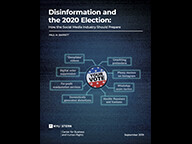
How Social Media Companies Need To Address Disinformation Globally - By Michael Posner

Michael Posner
Political activists and autocratic governments are misusing the Internet to distribute massive amounts of deliberately false information. This harmful content is undermining political discourse and encouraging extremism in the U.S. and elsewhere. The debate about this issue has focused disproportionately on the U.S. and Europe, and partly for this reason, the big Internet companies have dramatically underinvested in their operations in the global South.
Read more about How Social Media Companies Need To Address Disinformation Globally - By Michael Posner

Opinion

—

Why A New Commission Could Undercut The US' Human Rights Efforts - By Michael Posner

Michael Posner
On May 30, the State Department announced the creation of a new “Commission on Inalienable Rights,” an ill-conceived initiative that calls into question the Department’s decades-long record of support for human rights and the promotion of democracy.  Commissioners will be charged with providing “fresh thinking about human rights,” an unsubtle dig at those who already work daily on these issues within the State Department.
Read more about Why A New Commission Could Undercut The US' Human Rights Efforts - By Michael Posner

Opinion

—

Why There Is A Need For A Long-Term Investment Model In Ethiopia - By Michael Posner

Michael Posner
In the last several years, a growing number of global apparel companies have begun having their products manufactured in Ethiopia. For these firms, Ethiopia has become the new low-wage frontier. The East African country now competes with Bangladesh, Vietnam and other South and East Asian nations for a share of the massive volume of global garment production. In this competition, Ethiopia has the dubious distinction of offering the lowest pay anywhere in the worldwide clothing supply chain—and that’s the main reason the big brands are drawn there.
Read more about Why There Is A Need For A Long-Term Investment Model In Ethiopia - By Michael Posner

Opinion

—

Why Breaking Up Facebook Doesn't Solve Our Most Pressing Social Media Problem - By Michael Posner

Michael Posner
This week, Chris Hughes, a co-founder of Facebook, delivered a dramatic and dire diagnosis of threats his former company poses to our society. Much of his assessment is accurate and troubling. Speaking as an insider, he provides a compelling account of just how powerful Facebook has become and the dangers associated with its dominance. Yet the prescription he proposes—breaking up the company—doesn’t address what is perhaps the most important aspect of the problem—namely, the flood of politically divisive disinformation and harmful content online.
Read more about Why Breaking Up Facebook Doesn't Solve Our Most Pressing Social Media Problem - By Michael Posner

Research Highlights

—

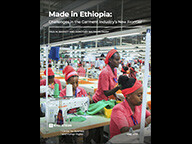
Made in Ethiopia: Challenges in the Garment Industry’s New Frontier - By Stern Center for Business and Human Rights

Cover of "Made in Ethiopia: Challenges in the Garment Industry's New Frontier"
A new report from the NYU Stern Center for Business and Human Rights provides a close look at the flagship Hawassa Industrial Park, a vast and still only partly filled facility which currently employs 25,000 workers about 140 miles south of the capital of Addis Ababa.
Read more about Made in Ethiopia: Challenges in the Garment Industry’s New Frontier - By Stern Center for Business and Human Rights
Subscribe to Center for Business and Human Rights